Concrete pad installation by use
A pad is judged by what sits on it. An AC condenser needs a level, raised base it can be tied to; a hot tub needs a flat, reinforced pad that holds several tons; a shed pad needs to be a little bigger than the shed. The table puts each use beside the rule or maker's spec that applies to it, and links to the page that goes deeper.
| Pad | What sets the spec | More detail |
|---|---|---|
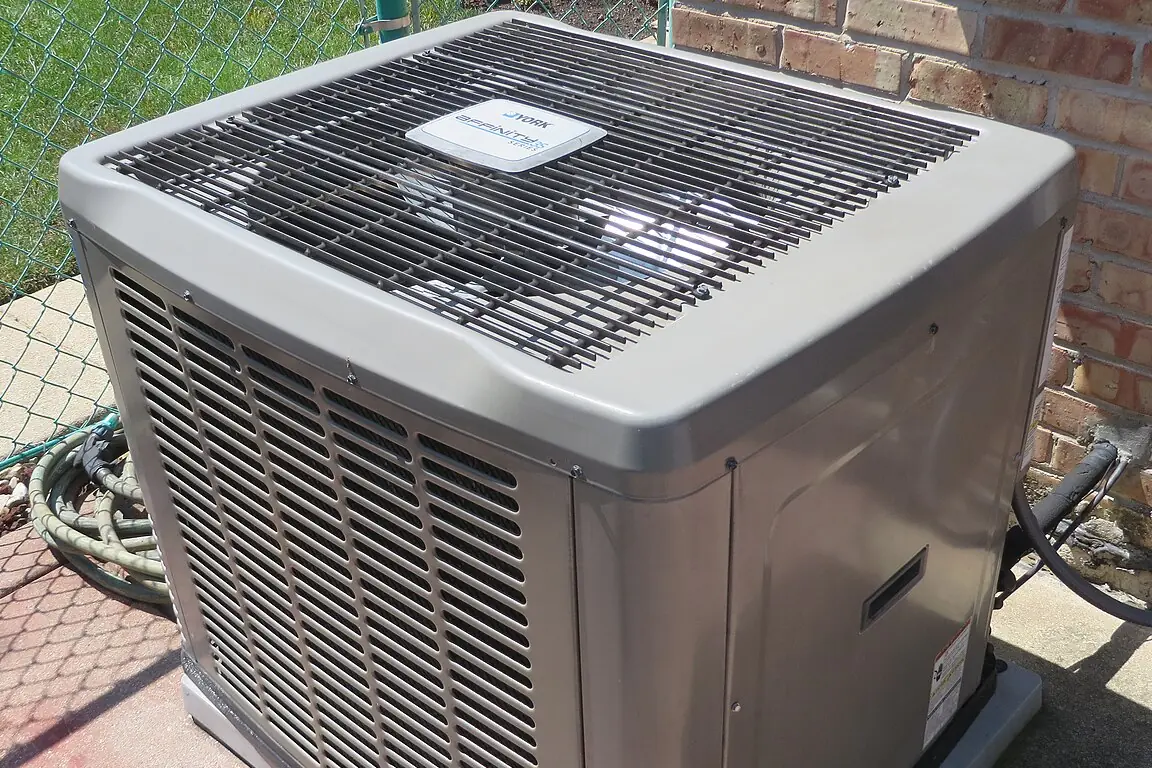
| AC condenser | Level, at least 3 in above adjoining ground (FBC-R M1305.1.4.1); appliance anchored (M1307.2) | AC condenser pads |
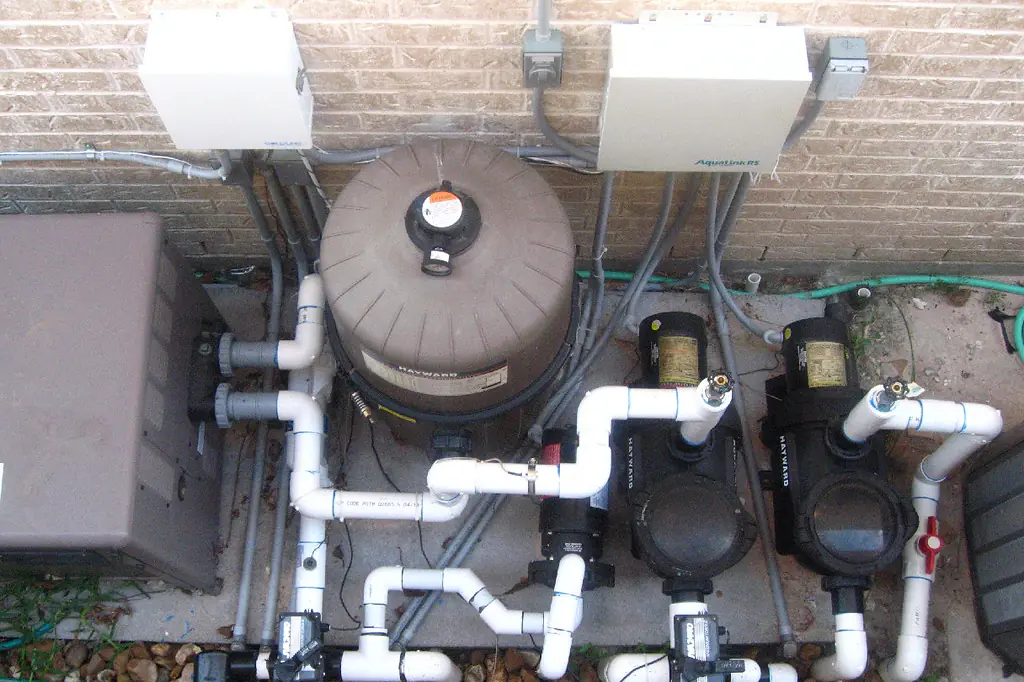
| Pool pump, filter, heater | Heaters and heat pumps are ground-set equipment, so the same 3 in rule applies; the pad must drain | Pool equipment pads |
| Standby generator | The generator maker's installation manual sets clearances from walls, windows and vents | Generator pads |
| Shed | Hillsborough: no permit under 150 sq ft outside flood hazard areas; the pad is sized past the walls | Shed pads |
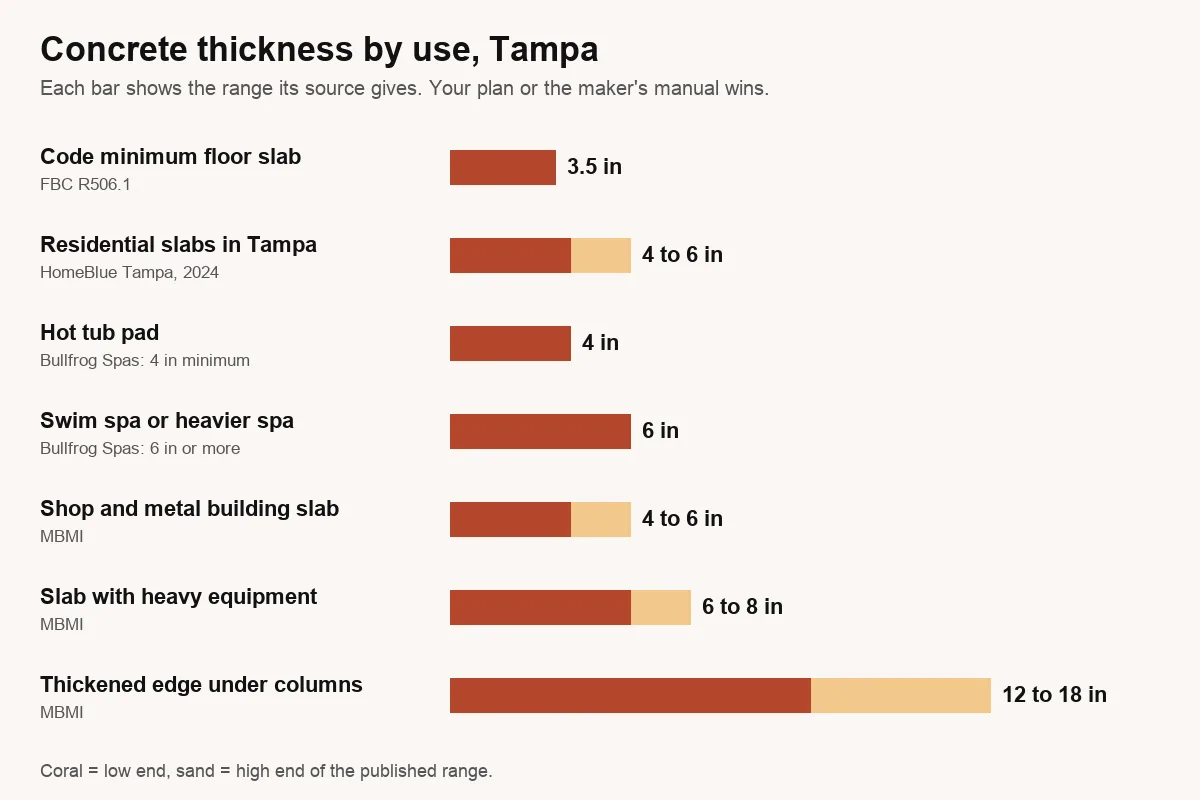
| Hot tub | Bullfrog Spas: at least 4 in, reinforced, no more than 1/2 in of slope over 8 ft | Hot tub pads |
| RV or boat | Sized to the full length plus tongue; on the thick end of Tampa's 4 to 6 in residential range | RV and boat pads |
Swipe the table sideways to see every column →
FBC-R = Florida Building Code, Residential, 2023. Maker's instructions win when they ask for more.
- AC condenser pads in Tampa →
- Pool equipment pads in Tampa →
- Generator pads in Tampa →
- Shed pads in Tampa →
- Hot tub pads in Tampa →
- RV and boat pads in Tampa →
Building a concrete pad on Tampa ground
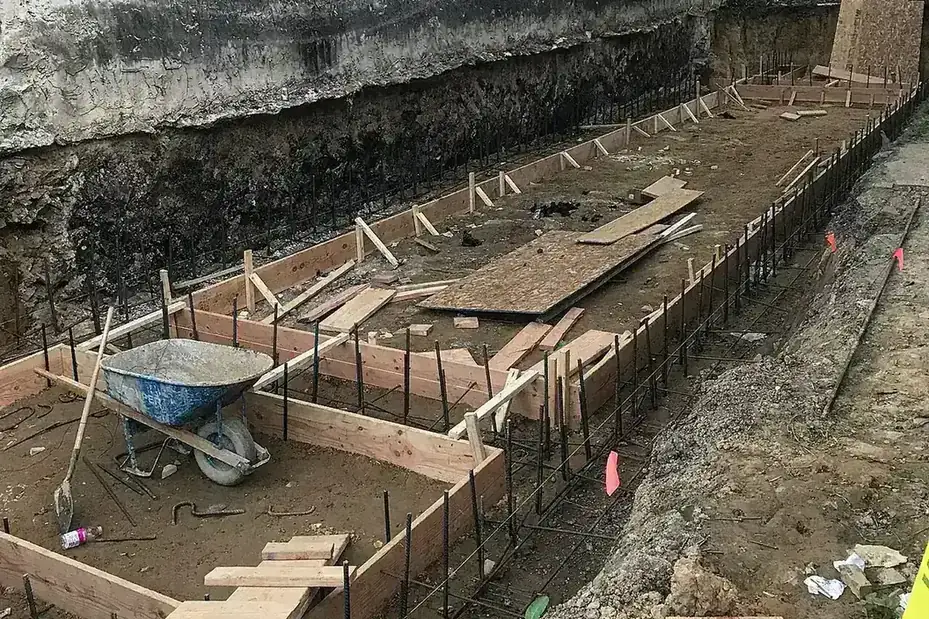
Most Tampa pads sit on sand, which drains well and compacts well when it is clean. The weak spots are elsewhere: loose fill against a new house, a low side yard that holds water after a storm, or roots that rot out under the pad. The fix is the same each time, dig to firm material, build back with compacted base, and slope the top so water leaves.
- Strip grass and roots; organic soil under a pad settles as it rots
- Compact the base in lifts instead of one deep dump of fill
- Raise equipment pads at least 3 inches above the surrounding ground
- Slope the surface away from the house; Florida wants impervious surfaces within 10 feet sloped 2 percent away
- Set anchor bolts or straps where the equipment maker or engineer calls for them
Wind changes the bolts, not the concrete
Tampa sits inside the wind-borne debris region with design winds around 150 to 160 mph, so the question for an outdoor equipment pad is often what holds the unit down. Florida's code requires appliances meant to stay in place to be fastened or anchored. Read the hurricane anchoring guide before the pour, because embedded anchors are easier than drilled ones.
What a concrete pad costs
Small pads are where per-square-foot prices mislead the most. HomeBlue lists an unreinforced Tampa pad at $5 to $10 per square foot, but a 3x4 condenser pad still needs a truck or bagged mix, forms and a finisher's visit, so expect a minimum charge. Larger pads behave like slabs: a 12x12 pad is 144 square feet, or about $799 to $1,597 at projectcosted's 2026 Tampa rate. Run your size through the concrete slab calculator.
For thickness and steel by use, see the slab thickness, rebar and vapor barrier guide; for when a pad or the thing on it needs a permit, the Tampa slab permit guide.