Last reviewed October 2026.
Tampa's wind numbers in plain terms
| Term | Tampa value | What it means for a slab |
|---|---|---|
| Ultimate design wind speed (Vult) | About 150 to 160 mph, Risk Category II, 3-second gust | The wind the anchors are designed to resist; varies by exact site |
| Exposure category | Exposure C near Tampa Bay or open terrain | Higher pressures than sheltered sites; bigger anchors |
| Wind-borne debris region | Tampa is inside it | Impact from debris, not only pressure; openings protected |
| High-Velocity Hurricane Zone | Not Tampa (Miami-Dade and Broward) | Standard Florida provisions apply |
| Wind design required | Where Vult is 115 mph or more (FBC-R R301.2.1.1) | Every Tampa site qualifies |
Swipe the table sideways to see every column →
Florida Building Code 2023, 8th Edition. Site-specific values come from the code's wind map and the designer.
What hurricane anchoring to a slab means
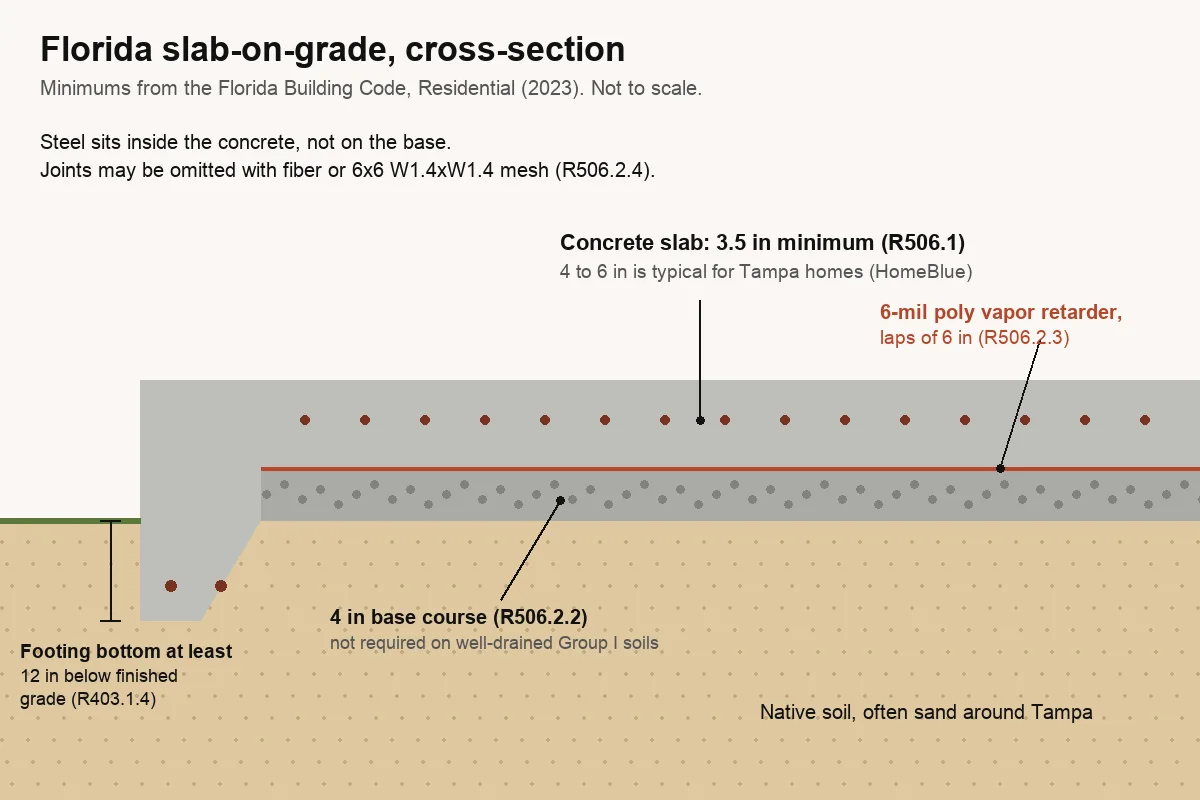
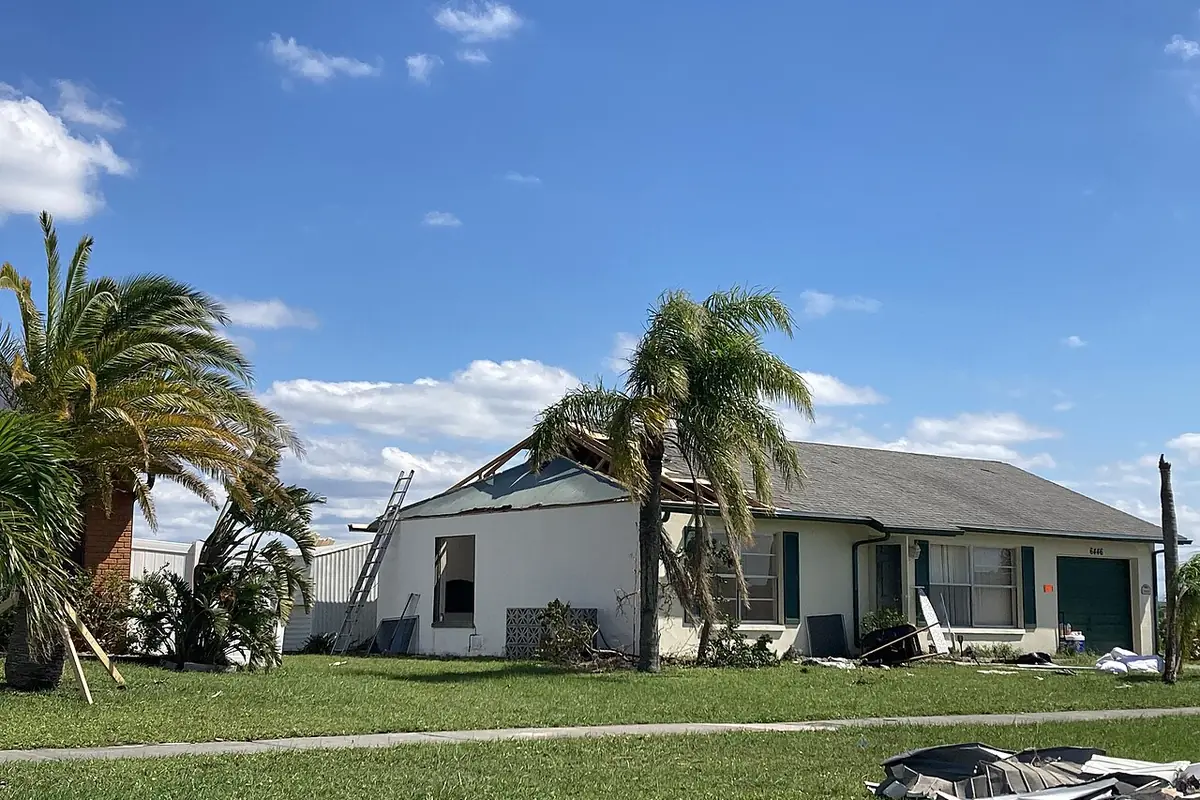
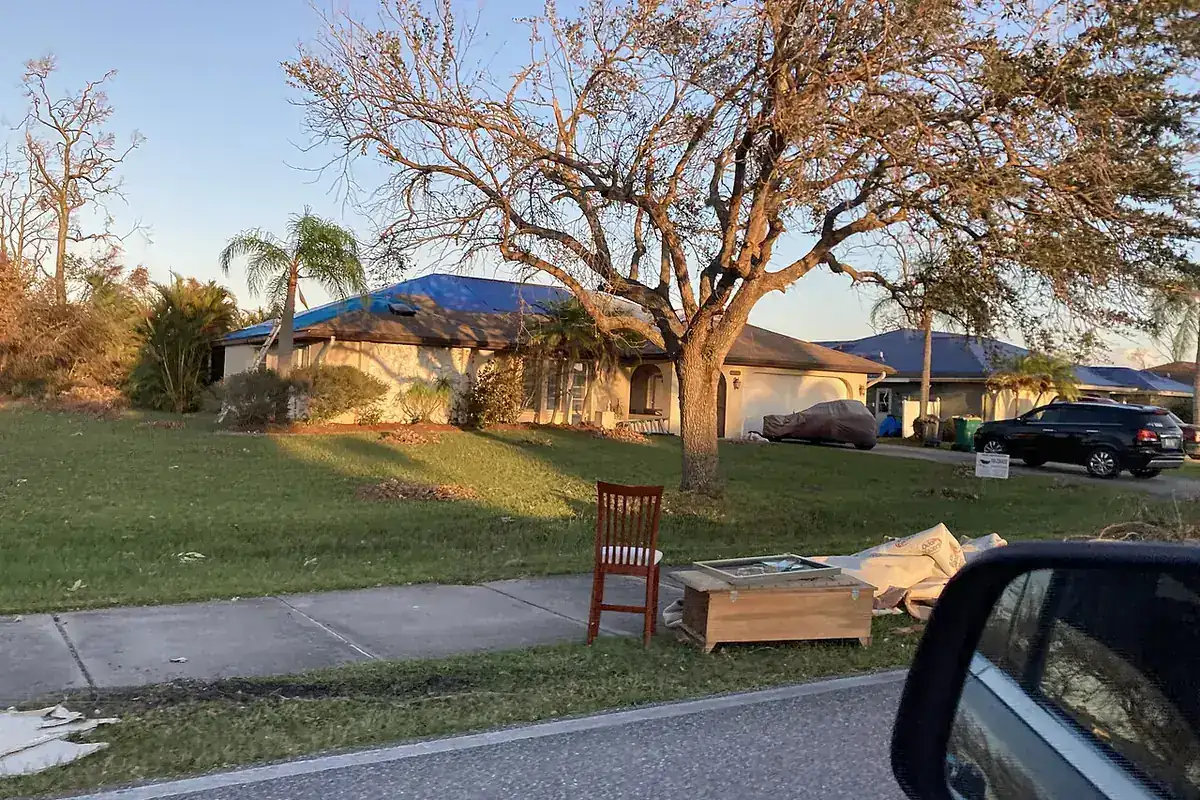
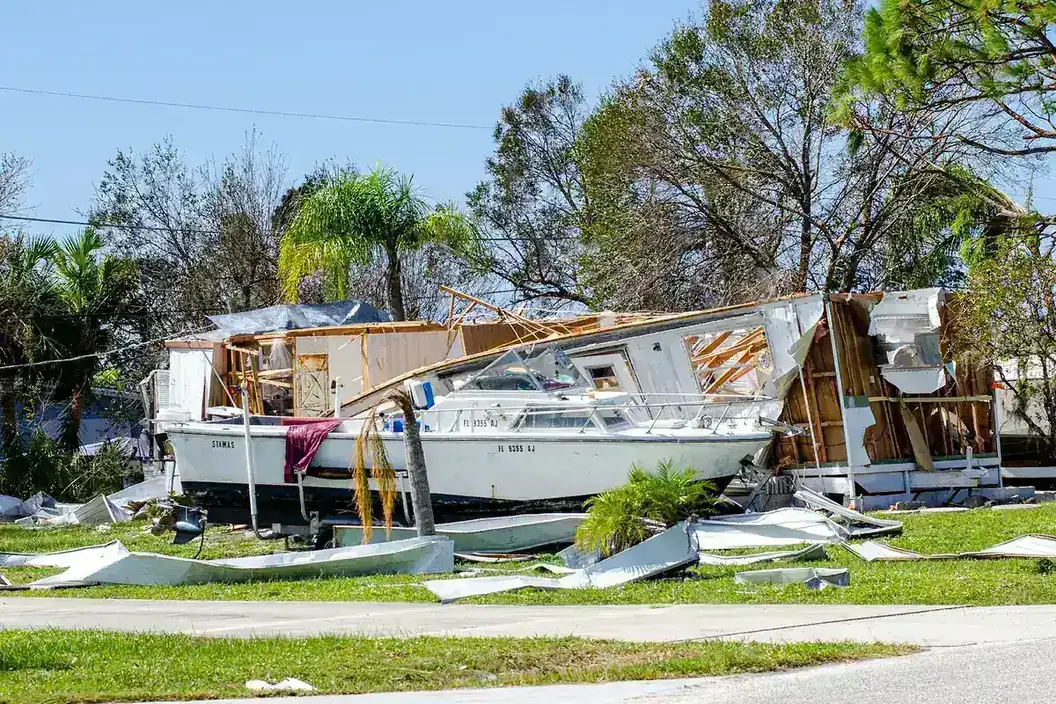
Wind pushes on walls, but the bigger problem for light structures is uplift: wind flowing over and under a roof tries to lift it. A shed, carport or steel building resists that only through its connection to something heavy. The slab, and the thickened concrete under each post or column, is that something.
- Permitted anchorage is typically engineered, with calculations sealed by a Florida-licensed engineer or architect
- The design accounts for wind pressure on the whole structure and on its parts and cladding
- Anchors need enough concrete around them; edges and joints are weak spots
- Bolts set in the fresh pour, held by templates, are more reliable than holes drilled later
- Florida's code also says appliances meant to stay put are fastened or anchored (M1307.2)
Structure by structure
| Structure | What sets the anchors | Read more |
|---|---|---|
| Shed under 150 sq ft | Maker's instructions; the code still applies though no county permit is needed | Shed pads |
| Shed, gazebo or carport over 150 sq ft | Sealed or approved plans filed with the county permit | Carport slabs |
| Metal building | The manufacturer's anchor bolt plan and its engineer | Metal building slabs |
| AC condenser, heat pump, generator | Equipment maker's instructions; FBC-R M1307.2 | Generator pads |
Swipe the table sideways to see every column →
- Shed pads in Tampa →
- Carport slabs in Tampa →
- Metal building slabs in Tampa →
- Generator pads in Tampa →
Under 150 square feet still means anchored
Hillsborough County lets small residential sheds skip the permit, but says plainly that an exemption doesn't waive the building code. A small shed in the wind-borne debris region still gets tied down. The permit guide explains where the 150 square foot line applies.