Tampa Concrete Slabs
Slabs, Pads & Footings, FL
Large standby generator on a fuel tank base sitting on concrete beside a brick wall
Generator Pads

Generator Pads in Tampa, FL

A generator pad in Tampa, FL is a small, level concrete slab that holds a standby generator above storm water, in the spot its maker's clearances allow, with anchors for hurricane wind. Tampa Concrete Slabs pours concrete generator pads ahead of the electrician and the gas or propane installer, so the pad is ready when the unit arrives, not after the next storm.

  • Placed to the maker's clearances
  • Raised above grade
  • Anchor-ready
  • Poured before storm season
Get a Free Quote

Where the generator pad goes

The generator decides the spot, not the concrete. Each maker publishes how far its unit must sit from walls, windows, doors and air intakes, because exhaust and heat have to go somewhere safe. Those numbers differ by model, so the installation manual comes first, the pad second.

  • Read the model's installation manual for every clearance it lists
  • Keep it away from bedroom windows, doors and the AC's air path
  • Leave service space on the sides the technician needs to open
  • Plan the route for the electrical and the gas or propane line
  • Stay inside your setbacks and clear of easements
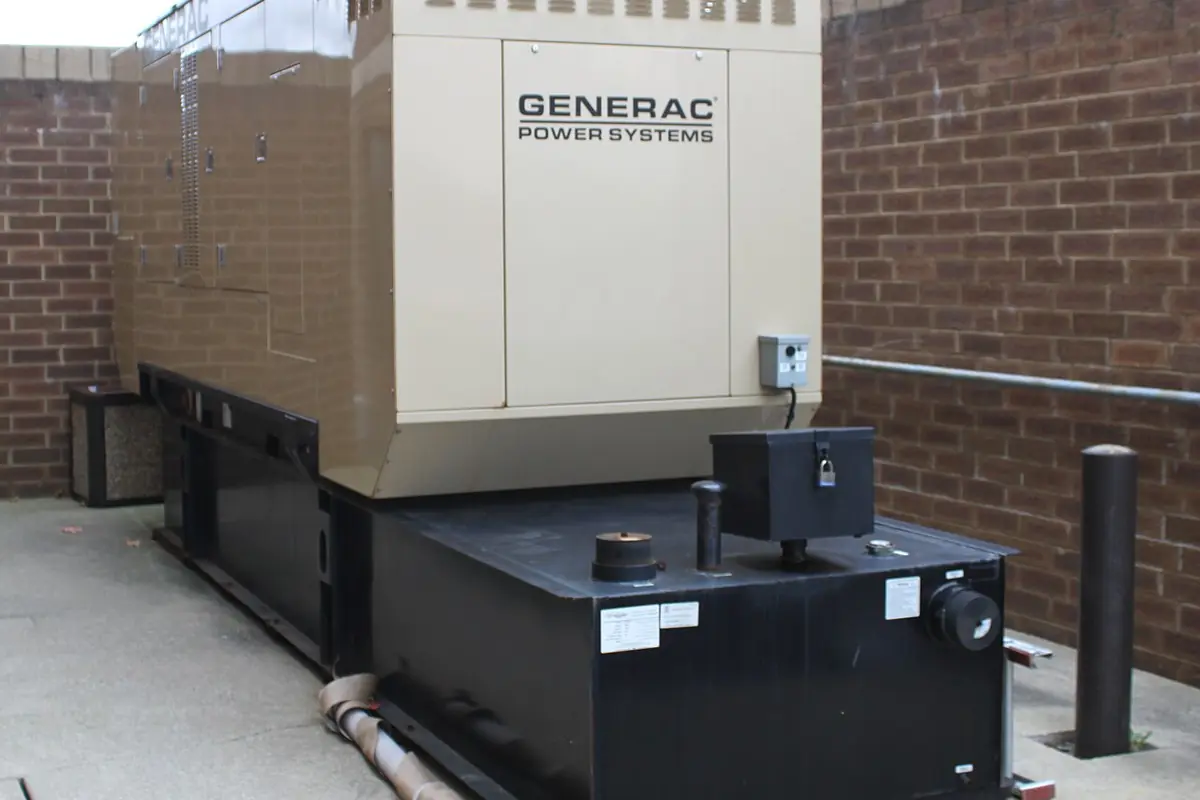
Large standby generator on a fuel tank base sitting on concrete beside a brick wall
A large standby generator on concrete. Home units are smaller; the pad idea is the same.

Height, size and anchoring for a generator pad

A generator that floods doesn't help after a storm. Florida's code puts ground-supported mechanical equipment on concrete at least 3 inches above the surrounding ground, and the same idea keeps a generator's base out of standing water. The pad is sized to the unit's base plus a little margin, and anchors are set where the maker's base calls for them; Florida's code wants fixed appliances fastened or anchored.

What sets each part of a generator pad
PartGuided by
Location and clearancesGenerator maker's installation manual
Height above gradeAt least 3 in, following FBC-R M1305.1.4.1 for ground-set equipment; more on low lots
SizeThe unit's base footprint plus margin
AnchorsMaker's base pattern; FBC-R M1307.2 requires fixed appliances to be fastened or anchored
Flood elevationAsk the county if the lot is in a mapped flood zone

Swipe the table sideways to see every column →
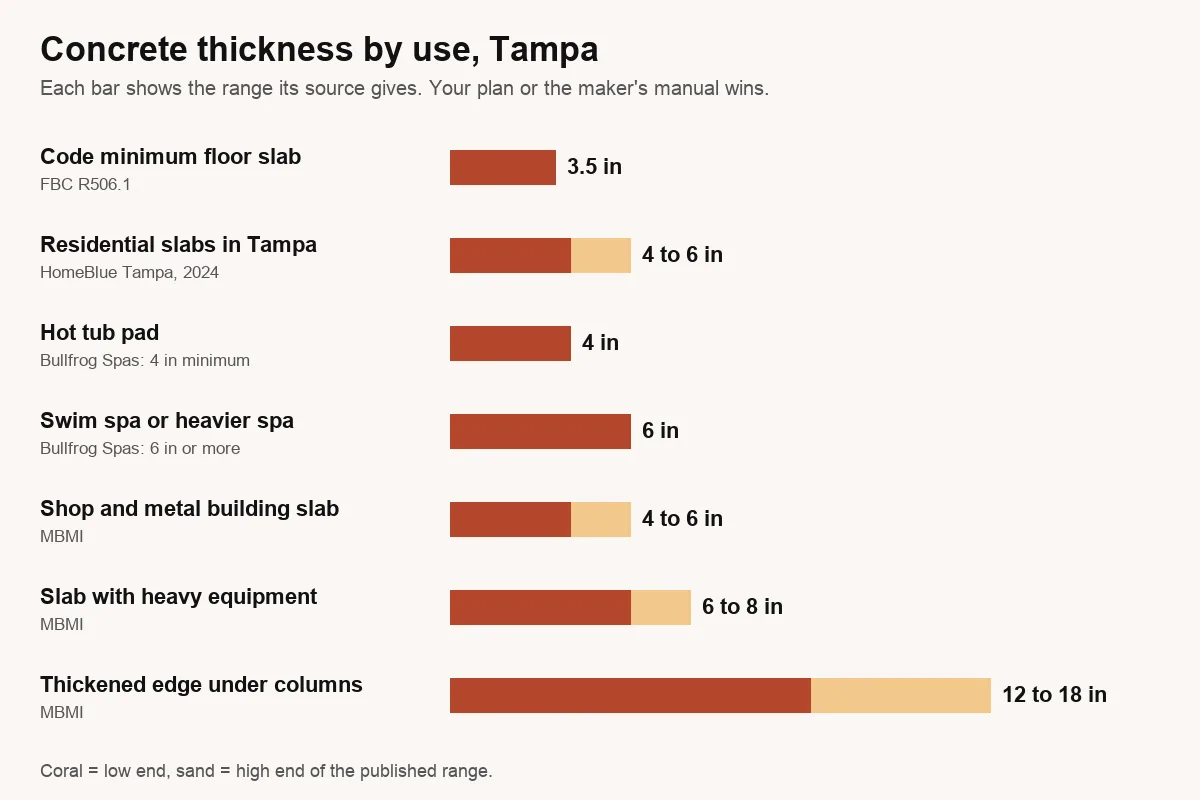
Generator pad thickness reference for Tampa FL: 3.5 inch code minimum and the 4 to 6 inch residential range
Our own diagram from the sources cited on this site. Not to scale.

Wind

Tampa's design wind speed is around 150 to 160 mph and the city sits in the wind-borne debris region. A bolted-down generator stays put; read the hurricane anchoring guide for why anchors are cast in rather than added later.

Timing a generator pad around Tampa weather

The National Weather Service office for Tampa Bay describes tropical-system risk peaking from mid-September to early October, on top of a summer afternoon storm cycle that starts in late May. A pad poured in the spring is cured, inspected and holding a generator before either one matters. See pouring concrete in Tampa rain for the seasonal pattern.
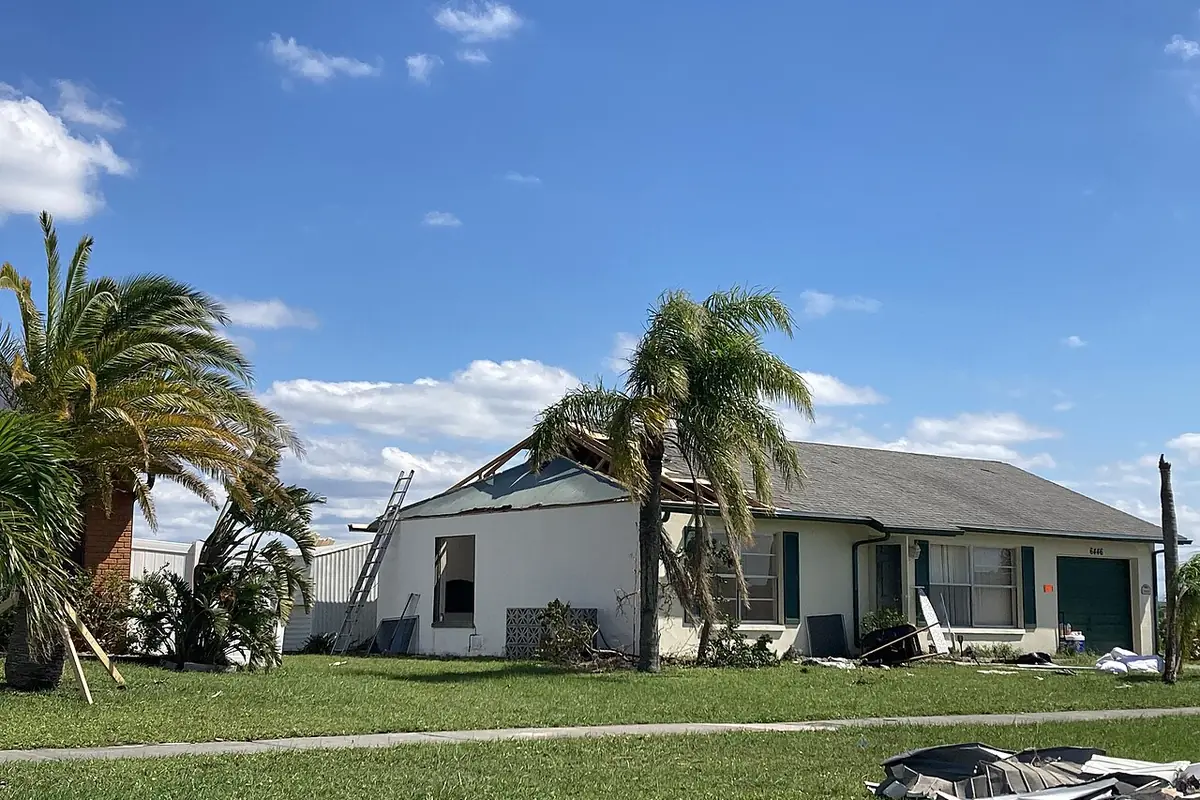
Single-story house with a torn-open roof and debris on the lawn after a hurricane
Roof and wall damage after a hurricane.

Other equipment pads: AC condenser pads, pool equipment pads and concrete pad installation.

Request a Free Quote

Takes about a minute. The quote is free, with no obligation.

Generator on the way?

Send the model or its footprint and the address. Free quote.

  • Free quote, no obligation
  • New concrete only: slabs, pads and footings
  • Tampa and unincorporated Hillsborough County
  • Four fields, no phone call needed
Request a Free Quote

Takes about a minute. The quote is free, with no obligation.

Generator Pads in Tampa, FL: Frequently Asked Questions

Does a standby generator need a concrete pad?

The generator maker's installation manual says what base the unit needs. Where concrete is used, it gives a level, raised, permanent base that won't wash out in a storm and a solid place to anchor the unit.

How far from the house does a generator pad go?

The generator maker's installation manual sets the clearance from walls, windows, doors and vents, and it differs by model. Get that page before the pad is placed; a pad poured in the wrong spot is hard to move.

How high should a generator pad be in Tampa?

Above the water that collects after a storm. Florida's code asks for ground-supported mechanical equipment to sit at least 3 inches above the adjoining ground, a sensible floor for a generator pad too. On a lot in a mapped flood zone, ask the county about elevation.

When should I install a generator pad in Tampa?

Well before you need it. The National Weather Service in Tampa Bay notes tropical-system risk peaks from mid-September to early October. A pad poured in spring is long cured by then.

What does a generator pad cost?

It's a small slab, often a few feet on each side, so a minimum charge usually applies rather than a per-square-foot price. A 4x6 pad is 24 square feet, under a third of a cubic yard at 4 inches.

Get a generator pad quote

Model or size and the address is enough.

Get a Free Quote
Free Quote